
All 36 State Assemblies Approve State Police Bill as Tinubu Seeks Intelligence-Led Security
Nigeria’s proposed state police system has received unanimous approval from all 36 State Houses of Assembly, clearing a major constitutional hurdle. Meanwhile, President Bola Tinubu has called for stronger intelligence-sharing, technological innovation and international partnerships to tackle insecurity.
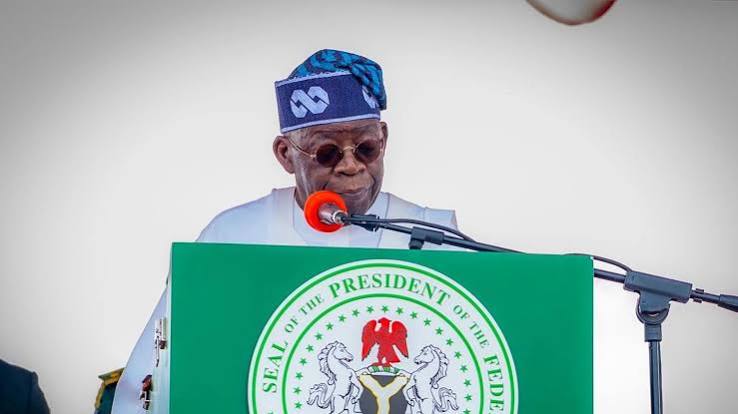
Nigeria’s proposed state police system has received approval from all 36 State Houses of Assembly, exceeding the constitutional requirement and paving the way for the amendment bill to be transmitted to President Bola Tinubu for assent.
The Clerk to the National Assembly, Kamoru Ogunlana, announced the development in a statement, confirming that his office had completed the verification of the approvals and established that the bill had met the necessary constitutional and administrative requirements.
The approval represents a significant step towards decentralising Nigeria’s policing structure, with the proposed amendment seeking to establish State Police Services alongside the Federal Police Service.
Under Section 9(2) of the 1999 Constitution, an amendment requires the approval of at least two-thirds of the 36 state legislatures, representing 24 states. The unanimous endorsement therefore exceeds the required threshold.
The bill was passed by the Senate on June 24 and the House of Representatives on July 23, 2026, before being transmitted to the state legislatures on September 16 for consideration.
Ogunlana explained that the National Assembly had initially delayed transmission to the President to allow further engagement with state legislatures and secure broader consensus.
Under the proposed arrangement, state governments would establish and operate their own police services alongside the Federal Police Service. Governors would appoint commissioners of police on the recommendation of the National Police Council, subject to confirmation by their respective State Houses of Assembly.
While the Federal Police would retain responsibility for national security matters, state police formations would focus on law enforcement, crime prevention and security challenges within their jurisdictions.
Supporters of the reform argue that decentralised policing would strengthen local intelligence gathering and improve responses to security threats. However, concerns remain over possible political interference, abuse of authority, funding and accountability.
The legislative development coincides with renewed efforts by the Federal Government to strengthen Nigeria’s security architecture through intelligence-sharing, technological innovation and international cooperation.
Speaking at the opening of the Chief of Defence Intelligence Annual Conference 2026 in Abuja, Tinubu urged security agencies to improve operational coordination and embrace emerging technologies to address increasingly complex security challenges.
Represented by the National Security Adviser, Nuhu Ribadu, the President called for stronger partnerships with global technology companies and research institutions to improve intelligence gathering and national security capabilities.
He also urged Nigerian Defence Advisers serving abroad to maximise bilateral and multilateral engagements in support of the country’s security objectives.
The conference, themed Optimising Intelligence Through Technological Innovations and Strategic Partnerships in a Complex Security Environment, brought together senior government officials, military commanders and intelligence representatives.
Tinubu said Nigeria had recorded gains in counter-terrorism operations through sustained military action and improved collaboration among security agencies.
He disclosed that four of eight identified senior terrorist leaders had been killed or arrested under his administration, citing operations against ISWAP and other militant networks.
The President stressed the need for closer cooperation among the Armed Forces, Department of State Services, National Intelligence Agency and Nigeria Police Force to improve intelligence coordination, respond promptly to emerging threats and protect vulnerable communities.
Meanwhile, Defence Minister Christopher Musa disclosed that the Nigerian military was receiving real-time intelligence, satellite imagery and training support from the United States to track militant leaders and disrupt insurgent networks.
Musa said the cooperation had improved the military’s ability to identify targets and conduct operations against terrorist and bandit groups.
He also disclosed that Nigeria was expecting additional helicopters from the United States and Italy to strengthen its operational capacity.
The minister said security agencies were monitoring the use of satellite internet services, cryptocurrencies and commercial drones by militant groups, while working with American authorities to disrupt their activities and financing networks.
He further revealed that Nigeria had reached an agreement with Cameroon, Niger and Chad allowing troops to pursue militants across designated five-kilometre border areas.
According to him, Islamic State Sahel was attempting to recruit criminal gangs in north-western Nigeria, raising concerns that profit-driven bandit groups could develop into ideologically motivated insurgent organisations.
In a related development, the Inspector-General of Police, Olatunji Disu, has redeployed several senior officers to strategic commands and departments as part of efforts to improve the operational effectiveness of the Nigeria Police Force.
The redeployment affects Deputy Inspectors-General of Police, Assistant Inspectors-General and Commissioners of Police.
DIG Olaolu Adegbite was appointed head of the Force Intelligence Department, while DIG Dankombo Morris was assigned to lead the Department of Information and Communication Technology.
AIG Clement Robert was posted to head the Force Criminal Investigation Department, while AIG Enyinnaya Adiogu was assigned to Zone 4 Police Headquarters in Makurdi.
Other officers were posted to departments and commands covering maritime policing, border patrol, operations, special protection, anti-human trafficking and forensic investigations.
Disu charged the affected officers to uphold professionalism, accountability and integrity, urging them to remain committed to effective policing and improved service delivery.
Sponsored

Related stories
 News
Delta Governor Backs CAN Prayer Retreat Centre Project
Delta State Governor Sheriff Oborevwori has pledged government support for the proposed Christian Association of Nigeria (CAN) Prayer Retreat Centre, promising to work with the Christian community to secure suitable land for the project.
 News
Nigeria Cannot Afford to Ignore Technology in Education, Says Minister
Minister of Education, Tunji Alausa, has urged Nigeria to embrace technology in education, warning that the country cannot continue relying on manual teaching and learning methods amid widespread learning difficulties and inadequate access to qualified teachers.
 News
Tinubu Approves Take-Off of Kebbi Inland Dry Port
President Bola Tinubu has approved the establishment of an inland dry port in Kebbi State to strengthen trade, improve cargo handling and stimulate economic activities across the North-West region.
 News
NDC Urges Opposition Parties, Nigerians to Scrutinise INEC Voter Register
The Nigeria Democratic Congress (NDC) has urged opposition parties, civil society organisations and Nigerians to scrutinise the Independent National Electoral Commission's preliminary voter register ahead of the 2027 general elections, citing unexplained increases in registered voters in parts of the country.
Comments (0)
Leave a comment
All comments are moderated before publishing. Your email is never published.