
Subsidy, Your Reforms Worsening Hardship, Atiku Lashes at Tinubu
Former Vice President Atiku Abubakar has criticised President Bola Tinubu’s economic reforms, arguing that subsidy removal and foreign exchange liberalisation have worsened the cost-of-living crisis despite increased government revenues. Atiku defended his proposal to restore a targeted, temporary fuel subsidy mechanism tied to domestic production.
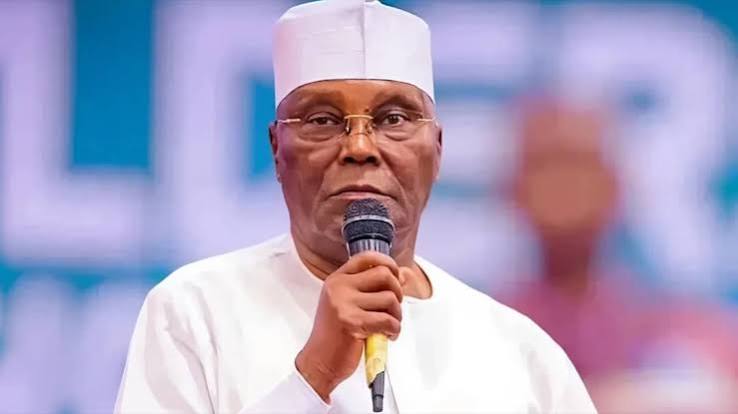
Former Vice President Atiku Abubakar has accused President Bola Tinubu’s administration of worsening economic hardship through its reforms, particularly the removal of petrol subsidy and liberalisation of the foreign exchange market.
Atiku, the African Democratic Congress presidential candidate, made the criticism in a statement issued by his Senior Special Assistant on Public Communication, Phrank Shaibu, on Friday.
He was reacting to Tinubu’s description of his proposal to restore fuel subsidy as evidence of “serious ignorance” of governance and economic management.
Atiku had earlier pledged to restore the subsidy if elected, saying those who had stolen from the scheme should refund the money.
Defending his position, Atiku said he was not proposing a return to the previous open-ended subsidy regime but a targeted, capped, budgeted and time-bound production-support mechanism.
He said the proposed arrangement would be tied to domestic production and independently audited to prevent abuse and arbitrage.
According to Atiku, the removal of subsidy without adequate measures to cushion its effects had contributed to increases in petrol prices, transportation costs, food prices and household expenses, alongside significant naira depreciation.
He also questioned continued petroleum under-recoveries and energy-security costs recorded in the accounts of the Nigerian National Petroleum Company Limited.
Atiku argued that Nigerians were bearing the burden of higher living costs while questions remained about the financial obligations associated with the petroleum sector.
He further criticised the Federal Government’s argument that increased Federation Account allocations to states represented an economic benefit of the reforms.
The former vice president said higher government revenues should not be presented as evidence of economic success if citizens were simultaneously losing purchasing power.
He also renewed his demand for explanations concerning about N30tn in Federation Account revenues, deductions, savings and transfers, as well as the N12.8tn Service-Wide Vote contained in the 2026 budget.
Atiku maintained that economic reforms should ultimately be judged by their effect on citizens rather than the size of government revenues.
He urged Nigerians to reject what he described as policies that deepen hardship, insisting that his proposed petroleum-sector intervention would support domestic production while gradually reducing dependence on subsidy.
Sponsored

Related stories
 News
Federal Character Breach: FCC Asks Customs to Suspend Training
The Federal Character Commission has called for the suspension of Customs recruitment training over alleged irregularities and unfair representation.
 News
Lagos-Calabar Highway to Be Completed in Three Years — Umahi
Works Minister David Umahi says the Federal Government plans to complete the 750-kilometre Lagos-Calabar Coastal Highway within the next three years.
 News
Ebola Patient in Nigeria Is Swiss Diplomat’s Wife — Report
Nigeria’s first confirmed Ebola patient in more than a decade is reportedly the Ugandan-born wife of a Swiss diplomat based in Abuja.
 News
States Receive 85% of Nigeria’s Resources, FG Gets Only 15% — Taiwo Oyedele
Taiwo Oyedele says Nigeria’s fiscal structure directs most federally collected revenue to states and local governments, challenging perceptions about resource distribution.
Comments (0)
Leave a comment
All comments are moderated before publishing. Your email is never published.