
Reps Move to Tighten Rules on Sale of Federal Assets
The House of Representatives is considering a bill to establish a National Public Assets Management Commission to oversee federal assets, strengthen transparency in their disposal and penalise unauthorised sales and mismanagement.
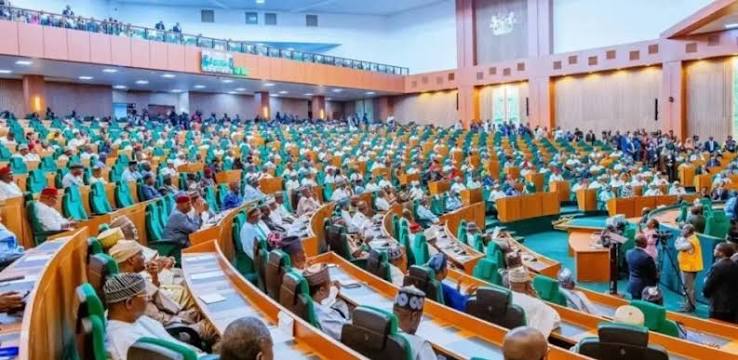
The House of Representatives is considering legislation to establish a National Public Assets Management Commission to regulate the registration, valuation, management and disposal of Federal Government assets.
The proposed National Public Assets Management Commission Bill, 2026, introduced in the House last week, covers properties and investments held by ministries, departments and agencies, as well as government-owned enterprises.
Sponsored by Lagos lawmakers Ademorin Kuye and Lanre Okunlola, the bill seeks to establish a central framework for monitoring government assets, improving accountability and preventing their unauthorised disposal.
Under the proposal, public institutions would be required to register their assets in a central database, disclose outstanding debts and other claims against their properties, and obtain the commission’s approval before selling, leasing, granting concessions over or otherwise disposing of public assets.
The proposed commission would have powers to request asset inventories, inspect government premises and records, issue binding directives to institutions and refer persistent cases of non-compliance to the President and the National Assembly.
Although existing agencies responsible for managing public investments and assets would retain their specialised statutory functions, they would be required to comply with the commission’s proposed standards for registration, valuation, reporting and approval.
The commission would not directly sell government property. Instead, the relevant institutions would continue to conduct disposal transactions, subject to its prior approval and oversight.
A major component of the bill is the establishment of a National Public Assets Register, which would contain information on each asset’s location, ownership, acquisition cost, current value, condition, maintenance history, legal status, revenue and outstanding financial obligations.
Each asset would receive a unique identification number to facilitate tracking throughout its useful life.
Existing public institutions would have 12 months after the law’s commencement to submit comprehensive asset inventories, while newly acquired assets would have to be registered within 90 days of acquisition, transfer or assumption of control.
The proposed register would incorporate digital records, electronic title documents, photographs, geographical information systems and valuation reports. Non-sensitive information would be accessible to the public through an online portal, while information relating to national security, defence, intelligence and protected commercial interests could be withheld.
The commission would also be required to publish an annual report detailing the total value of federal assets, associated financial obligations and their net value after liabilities.
The bill proposes mandatory independent valuations, competitive bidding, value-for-money assessments and consideration of the public interest before public assets can be sold or commercialised.
It provides that no public asset should be disposed of below its independently assessed market value, except where expressly permitted by law.
Material terms of asset monetisation contracts would also be published through a transaction portal, subject to lawful restrictions. The commission could monitor compliance, direct corrective action and recommend termination where a contract involved a material breach or raised public-interest concerns.
Assets placed under leases or concessions would be expected to revert to Federal Government ownership when the agreements expired or were terminated, in accordance with the proposed provisions.
The legislation also seeks to curb the unauthorised removal and undervaluation of obsolete government vehicles, machinery, industrial equipment and electronic devices.
Under the proposal, no public asset could be classified as scrap without a technical assessment, verification of its identity and an estimate of its recoverable value. Idle or underutilised assets would first be assessed for possible repair, redeployment, leasing or other productive use.
Scrap would be independently valued and sold through a competitive process, with details of its quantity, buyer and destination recorded in the national register. A Scrap Movement Certificate would be required before scrap could be removed from government premises.
The bill proposes fines of at least three times the assessed value of affected assets for individuals convicted of pilfering public property, alongside imprisonment or both, subject to the applicable provisions.
Corporate bodies, including government-owned enterprises and private contractors, could face fines of at least five times the assessed value, as well as suspension or disqualification from future public asset disposal transactions.
Other proposed offences include concealing assets, submitting false declarations, fraudulent valuation, unauthorised sales, conflicts of interest and obstructing inspections.
The commission would also be empowered to impose administrative sanctions on non-compliant institutions and pursue recovery of losses arising from offences under the proposed law.
The bill provides for whistleblower protection and a mechanism for receiving and investigating complaints about the concealment, mismanagement or unlawful disposal of public assets.
It further proposes a Recovered Assets Register covering property seized, confiscated, forfeited or recovered by relevant public institutions, including the Economic and Financial Crimes Commission, the Independent Corrupt Practices and Other Related Offences Commission and the Nigeria Deposit Insurance Corporation.
However, the commission would not interfere with investigations, prosecutions or court-supervised proceedings handled by the relevant agencies.
The proposed framework would also require annual reporting to the National Assembly on public assets and institutional compliance, while preserving the constitutional responsibilities of the Auditor-General for the Federation.
If enacted, the legislation would introduce common standards for managing federal assets and overseeing their disposal. Its impact would depend on effective implementation, accurate records, enforcement and coordination among institutions with overlapping responsibilities.
Sponsored

Related stories
 News
Otti Mourns Okonjo-Iweala’s Mother, Prof Kamene Okonjo
Abia State Governor Alex Otti has expressed condolences to World Trade Organisation Director-General Ngozi Okonjo-Iweala following the death of her mother, Prof Kamene Okonjo, at the age of 96.
 News
Ebola, SDP Candidate Warns Against Shifting 2027 Elections
Social Democratic Party presidential candidate Adewole Adebayo has opposed any move to postpone the 2027 general elections or suspend political campaigns because of Ebola concerns, urging authorities to protect public health without disrupting democratic activities.
 News
Police Arrest School Bus Driver Over Kidnapping, Sexual Assault of Delta Student
Delta State Police have arrested a 28-year-old school bus driver accused of abducting and sexually assaulting a 14-year-old student in Sapele after allegedly collecting ₦503,000 in ransom from her father.
 News
NAF Records 2,900 Security Missions, Uses Nearly 10 Million Litres of Fuel
The Nigerian Air Force says it recorded more than 2,900 operational sorties and over 6,100 flying hours between November 2025 and September 2026, consuming nearly 10 million litres of aviation fuel in support of national security operations.
Comments (0)
Leave a comment
All comments are moderated before publishing. Your email is never published.