
Power Remains Biggest Obstacle to Industrial Growth — Minister
Industries face rising operating costs as unreliable electricity undermines productivity, competitiveness and Nigeria’s industrial expansion efforts.
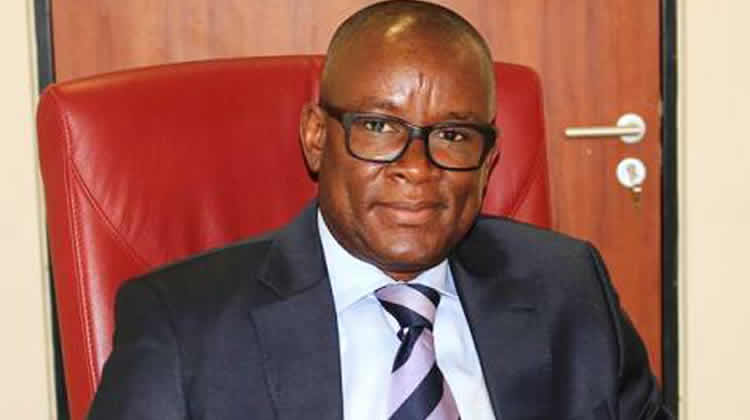
The Minister of State for Industries, Senator John Enoh, has identified inadequate and costly electricity supply as one of the biggest obstacles to Nigeria’s industrial growth, warning that businesses are spending heavily to generate power for their operations.
Enoh said Nigeria’s recent economic growth was encouraging but stressed that the country must sustain reforms and accelerate efforts to translate economic expansion into improved living standards and greater industrial productivity.
Nigeria’s economy grew by 4.43 per cent year-on-year in the second quarter of 2026. Enoh said the performance demonstrated that reforms were beginning to produce results, but noted that persistent structural challenges, particularly electricity supply, continued to limit the country’s industrial potential.
He explained that manufacturers and other industrial operators were being forced to spend more on alternative sources of electricity, increasing their production costs and making locally manufactured goods less competitive.
The minister said the Federal Government had recognised the importance of addressing these challenges as part of its broader industrialisation strategy. He pointed to the recently launched Nigerian Industrial Policy as the framework for strengthening manufacturing, improving investment and supporting sustainable industrial expansion.
The policy, approved by the Federal Executive Council before its launch in February 2026, is intended to provide a coordinated approach to industrial development and support President Bola Tinubu’s ambition of growing Nigeria’s economy to $1tn by 2030.
Enoh stressed that power was not the only issue affecting industrial development, with infrastructure, financing, investment and competitiveness also requiring attention. However, reliable and affordable electricity remains particularly important because of its direct impact on the cost of production.
The minister’s comments come amid growing concerns over the burden of energy costs on Nigerian manufacturers. Industry stakeholders have repeatedly warned that businesses relying on diesel generators face substantially higher operating expenses than competitors in countries with more reliable electricity.
The National Sugar Development Council recently estimated that Nigerian manufacturers spent about N1.34tn generating their own electricity in 2025, while industrial electricity costs were significantly higher than those in major Asian manufacturing economies.
Enoh said sustained reforms, investment and effective implementation of the industrial policy would be necessary to ensure that economic growth translates into stronger manufacturing, more jobs and broader prosperity.
Sponsored

Related stories
 News
News
FG Seeks Balance Between Workers’ Pay Demands, Fiscal Realities
The Federal Government has called for a balance between workers’ demands for higher salaries and its financial capacity as the Nigeria Labour Congress’ two-week ultimatum approaches its deadline. The government stressed evidence-based wage policies, constructive engagement with labour and sustainable public spending.
 News
News
Soldiers Rescue Kidnap Victim, Recover 18 Rustled Cattle in Kebbi
Troops have rescued a 40-year-old kidnap victim and recovered 18 rustled cattle following a gun battle with suspected terrorists in Danko-Wasagu Local Government Area of Kebbi State. The operation forms part of ongoing efforts to tackle kidnapping, cattle rustling and other security threats in the North-West.
 News
News
Scrap Dealers Challenge Zulum to Prove Alleged ₦3bn Power Line Cable Theft
The National Association of Scrap and Waste Dealers Employers of Nigeria (NASWDEN) has challenged Borno State Governor Babagana Zulum to provide verifiable evidence for his allegation that metal scavengers stole electrical cables worth more than ₦3 billion. The association wants details of the project and the alleged theft, warning against blaming the entire industry without evidence.
 News
News
Lagos APC Reaffirms Five Million Vote Target for Tinubu in 2027
The All Progressives Congress (APC) in Lagos State has reaffirmed its target of securing five million votes for President Bola Tinubu in the 2027 general elections. The party plans to strengthen grassroots mobilisation and hold leaders accountable through a polling-unit-based performance strategy.
Comments (0)
Leave a comment
All comments are moderated before publishing. Your email is never published.