
Oil Theft Drops 82.9 Per Cent in Five Years, Losses Rise to 17,600 Barrels Daily
Nigeria’s daily crude oil losses declined by 82.9 per cent between 2021 and the first seven months of 2026, but increased by 93.4 per cent from the 2025 level, according to regulatory data.
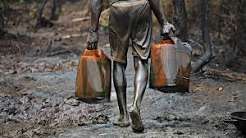
Nigeria’s daily crude oil losses fell by 82.9 per cent over five years, dropping from 102,900 barrels per day in 2021 to 17,600 barrels per day between January and July 2026, despite a recent increase in losses.
Operational statistics published by the Nigerian Upstream Petroleum Regulatory Commission (NUPRC) showed that daily crude losses reached a five-year low of 9,100 barrels per day in 2025 before rising by 93.4 per cent in the first seven months of 2026.
The figures, contained in the commission’s fifth anniversary publication, The Upstream Gaze, highlighted progress in efforts to curb crude theft and pipeline losses, alongside continuing challenges in protecting petroleum infrastructure.
The data showed that daily losses declined from 102,900 barrels in 2021 to 55,000 barrels in 2022, representing a reduction of 46.5 per cent. The figure fell further to 22,900 barrels per day in 2023, 11,200 in 2024 and 9,100 in 2025.
The Federal Government attributed the sustained decline to the combined efforts of security agencies, local pipeline surveillance groups in the Niger Delta and the deployment of modern crude oil measurement systems.
Despite the progress recorded over the period, the latest increase in losses points to the continuing need for stronger surveillance and protection of oil production and transportation facilities.
Crude Production Records Gradual Recovery
Nigeria’s total liquid hydrocarbon production, comprising crude oil and condensate, averaged 1.63 million barrels per day in the first seven months of 2026, compared with 1.62 million barrels per day in 2025.
The figures showed an improvement from 1.56 million barrels per day in 2024, 1.47 million in 2023 and 1.38 million in 2022. Production stood at 1.62 million barrels per day in 2021.
Crude oil production alone averaged 1.46 million barrels per day during the period under review, up from 1.43 million in 2025, 1.35 million in 2024, 1.24 million in 2023 and 1.14 million in 2022. The corresponding figure for 2021 was 1.31 million barrels per day.
Condensate production, however, continued to decline, averaging 170,000 barrels per day in the first seven months of 2026, compared with 190,000 in 2025, 210,000 in 2024, 230,000 in 2023, 240,000 in 2022 and 310,000 in 2021.
The data also indicated a shift in crude oil allocation as Nigeria expanded domestic refining capacity.
Average crude supply to local refineries rose to 460,000 barrels per day in the first seven months of 2026, compared with 280,000 in 2025, 220,000 in 2024, 20,000 in 2023 and 10,000 in 2022. Supply to domestic refineries was virtually non-existent in 2021.
The 460,000 barrels per day supplied to local refineries represented approximately 29 per cent of the 1.61 million barrels per day in total crude oil lifted during the period.
The increase in domestic allocation coincided with a decline in crude available for export. Average daily exports fell to 1.15 million barrels in the first seven months of 2026, compared with 1.33 million in 2025, 1.31 million in 2024, 1.47 million in 2023, 1.32 million in 2022 and 1.51 million in 2021.
The latest export figure represented a 13.5 per cent decline from 2025 and a 23.8 per cent reduction compared with 2021.
Total crude oil lifting averaged 1.61 million barrels per day during the period, slightly below the 1.62 million recorded in 2025, suggesting that increased domestic refinery supply has coincided with lower export volumes rather than a comparable rise in total crude lifted.
Meanwhile, the Nigerian Navy has uncovered approximately 132,000 litres of suspected stolen crude oil stored in 10 dugout pits in Allison community, Bonny Local Government Area of Rivers State.
Personnel of the Navy’s Forward Operating Base in Bonny discovered the crude on October 22 during an operation conducted under Operation Delta Sentinel, following intelligence reports.
The Director of Naval Information, Navy Captain Abiodun Folorunsho, said the operation disrupted a potential storage point within the illegal petroleum supply chain.
The Navy said the site and recovered products were handled in accordance with existing regulations, reaffirming its commitment to operations against crude theft, illegal refining and the unauthorised movement of petroleum products in the Niger Delta.
It urged community leaders, residents and other stakeholders to report suspected oil theft, illegal refining activities and suspicious petroleum storage to security agencies.
The developments underscore Nigeria’s continuing efforts to protect its petroleum resources, increase production and reduce losses, while the recent rise in crude theft-related losses highlights the need to sustain enforcement and strengthen cooperation with oil-producing communities.
Sponsored

Related stories
 News
Otti Mourns Okonjo-Iweala’s Mother, Prof Kamene Okonjo
Abia State Governor Alex Otti has expressed condolences to World Trade Organisation Director-General Ngozi Okonjo-Iweala following the death of her mother, Prof Kamene Okonjo, at the age of 96.
 News
Ebola, SDP Candidate Warns Against Shifting 2027 Elections
Social Democratic Party presidential candidate Adewole Adebayo has opposed any move to postpone the 2027 general elections or suspend political campaigns because of Ebola concerns, urging authorities to protect public health without disrupting democratic activities.
 News
Police Arrest School Bus Driver Over Kidnapping, Sexual Assault of Delta Student
Delta State Police have arrested a 28-year-old school bus driver accused of abducting and sexually assaulting a 14-year-old student in Sapele after allegedly collecting ₦503,000 in ransom from her father.
 News
NAF Records 2,900 Security Missions, Uses Nearly 10 Million Litres of Fuel
The Nigerian Air Force says it recorded more than 2,900 operational sorties and over 6,100 flying hours between November 2025 and September 2026, consuming nearly 10 million litres of aviation fuel in support of national security operations.
Comments (0)
Leave a comment
All comments are moderated before publishing. Your email is never published.