
2027: Court Faults INEC, Vacates Deadline for Primaries, Nomination of Candidates
2027: Court Faults INEC, Vacates Deadline for Primaries, Nomination of Candidates
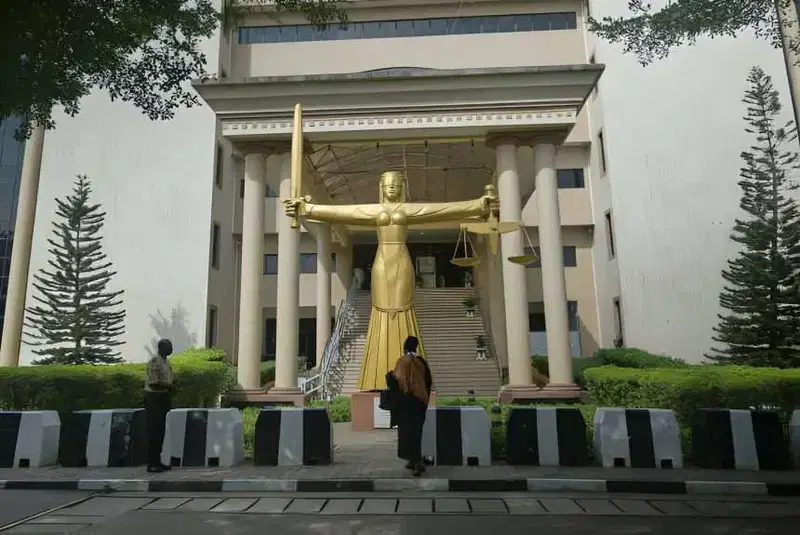
Political parties have secured legal relief ahead of the 2027 general elections after the Federal High Court in Abuja nullified the timetable issued by the Independent National Electoral Commission (INEC) governing primaries and the nomination of candidates.
The court, presided over by Justice Mohammed Umar, also set aside INEC’s May 10 deadline which required political parties to submit a register and database of their members as a condition for participation in the general elections.
In its ruling, the court held that the time frame imposed by INEC for political parties to conduct primaries, submit candidates’ details, or replace nominees was inconsistent with the provisions of the Electoral Act, 2026.
The judgment followed a suit filed by the Youth Party (YP), which asked the court to determine whether INEC had the legal authority to regulate the timeline for party primaries beyond what the Electoral Act provides.
The case, marked FHC/ABJ/CS/517/2016, had INEC as the sole defendant.
The plaintiff argued that under Sections 29, 82, and 84(1) of the Electoral Act, 2026, INEC’s role is limited to receiving and monitoring primaries, and does not extend to fixing deadlines for their conduct.
Justice Umar agreed with the arguments and ruled that INEC cannot lawfully shorten or alter statutory timelines already provided by law.
He noted that Section 29(1) of the Electoral Act requires political parties to submit candidates’ particulars not later than 120 days before an election, stressing that INEC cannot reduce that period through administrative guidelines.
The court also held that Section 31 of the Act allows parties to withdraw and substitute candidates up to 90 days before an election, and INEC has no power to impose earlier deadlines for such changes.
Similarly, it ruled that INEC cannot publish the final list of candidates before the minimum 60-day period stipulated by law under Section 32 of the Act.
Justice Umar further declared that INEC has no legal authority to fix campaign deadlines that end earlier than permitted under Section 98 of the Electoral Act, 2026.
The court consequently set aside all timelines contained in INEC’s revised 2027 election timetable that were inconsistent with the Electoral Act.
The judgment is expected to have significant implications for election planning and internal party processes as political actors prepare for the 2027 general elections.
Sponsored

Related stories
 News
Tinubu’s Umrah Trip Not Aimed at Winning Northern Votes, Says Aide
Presidential aide Ademola Oshodi has dismissed suggestions that President Bola Tinubu’s recent Umrah pilgrimage to Saudi Arabia was politically motivated, saying the visit had religious and national significance beyond regional electoral considerations.
 News
Soludo Says Political Differences Have Not Affected Friendship With Obi
Anambra State Governor Chukwuma Soludo has described former governor Peter Obi as a close personal friend, saying their disagreements are limited to politics despite their differing positions ahead of the 2027 elections.
 News
Telcos Urge Reps to Address Infrastructure Challenges Affecting Network Services
The Association of Licensed Telecommunications Operators of Nigeria has urged the House of Representatives to tackle infrastructure and policy obstacles affecting network quality, arguing that summoning company executives alone will not resolve persistent service failures.
 News
Traditional Rulers Face Neutrality Test Ahead of 2027 Elections
As politicians intensify visits to traditional palaces ahead of the 2027 general elections, concerns are growing over the ability of Nigeria’s monarchs to remain impartial amid political pressure and competing interests.
Comments (0)
Leave a comment
All comments are moderated before publishing. Your email is never published.